HVAC
Cooling, heat pumps, furnaces, ductless systems, ductwork, indoor air quality, thermostat controls, and emergency HVAC work for hot foothill conditions and older homes.
Service calls in older foothill homes rarely stay inside one neat trade. RidgeFlow diagnoses the failure, the access, the age of the system, and the next trade conflict before recommending work.
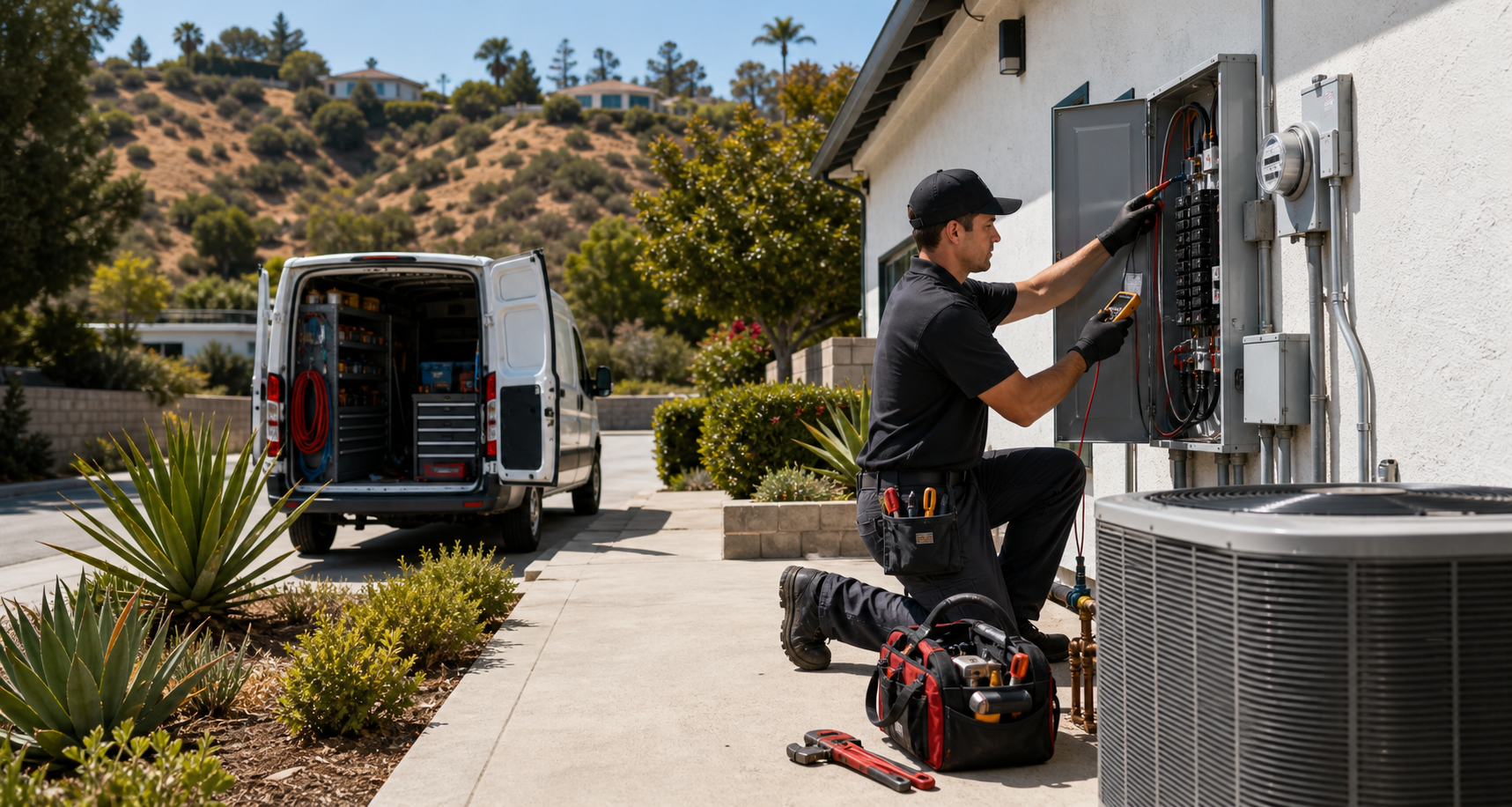
RidgeFlow is built for homeowners who need the HVAC, electrical, and plumbing answer to fit together. That matters for heat pumps, EV chargers, water heaters, ADUs, old ducts, old panels, and old sewer lines.
Cooling, heat pumps, furnaces, ductless systems, ductwork, indoor air quality, thermostat controls, and emergency HVAC work for hot foothill conditions and older homes.
Panel upgrades, EV chargers, dedicated circuits, rewiring, lighting, outlet repairs, backup readiness, and urgent electrical troubleshooting where load capacity matters.
Water heaters, tankless systems, drains, sewer camera inspections, leak detection, repiping, fixtures, and emergency plumbing for pressure, slope, and aging-pipe risk.
The site is organized around the way LA foothill homes actually fail: heat waves expose duct and AC limits; panel capacity blocks electrification; wildfire smoke loads filters; old pipes leak behind finishes; mature roots attack sewer lines; and canyon access changes the cost of otherwise routine work.
Every major service page connects the symptom to cost drivers, permits, access, old-home risk, and related work. City pages add jurisdiction and utility context so homeowners can avoid generic advice that ignores where the property is located.
Use the HVAC, electrical, or plumbing hubs when the failed system is obvious. Use the city hub when the property itself is the constraint: hillside access, old finishes, condo rules, jurisdiction boundary, utility provider, fire-zone exposure, or an older system that has been patched across decades. Use cost pages when the real question is repair versus replacement. Use guides when the decision crosses trades or will affect a remodel, insurance claim, ADU, EV charger, heat pump, water heater, sewer repair, or panel plan.
This structure is deliberate. A homeowner with an active leak needs a different route than a homeowner comparing heat-pump and panel options. A homeowner with sewer backup after rain needs a different route than someone replacing a fixture. The site gives those users different entry points instead of pushing every visitor through one generic contact page.
The best service plan names these dependencies early so the homeowner can approve the smallest durable scope instead of buying disconnected fixes.
This page uses official and authoritative references where they affect homeowner decisions: LA County Building and Safety permits, California Energy Commission building energy standards, EPA wildfire smoke and indoor air guidance, NFPA electrical safety at home.
When the scope requires more than one trade, RidgeFlow coordinates the assessment so the homeowner gets one practical order of operations instead of conflicting recommendations.
We explain likely permit and inspection touchpoints, then verify the correct path by parcel before work that requires city or county documentation moves forward.
Yes. The booking link captures the service request cleanly, and the phone CTA is ready for the real number once it is provided.
These visible review bodies are selected with the same page seed used by the JSON-LD review graph, so on-page copy and schema stay in sync.
The useful part was that the technician wrote down the evidence instead of selling from memory. Our Adams Hill house had ADU circuits and tight equipment paths, and the repiping planning visit included Type L copper and PEX comparison, 68 PSI regulator setting, and mapped branch lines before cutting walls. RidgeFlow explained what was proven, what still depended on access, and why the phased plan protected finishes. The scope called out what another trade needed to verify before work started. The notes were specific enough to compare against another estimate without guessing.
The useful part was that the technician wrote down the evidence instead of selling from memory. Our Hill Drive house had old grounding and hillside condenser placement, and the dedicated circuits visit included Siemens 20A AFCI/GFCI breaker, 12-gauge homerun, and kept the circuit separate from future heat-pump water heating. RidgeFlow explained what was proven, what still depended on access, and why the label schedule made inspection easier. They left enough detail for us to compare the plan with a second bid. The notes were specific enough to compare against another estimate without guessing.
The useful part was that the technician wrote down the evidence instead of selling from memory. Our Avenue 37 house had stair carries and slope drainage, and the drain cleaning visit included main-line cable and camera, 82-foot camera locate, and found roots near the clay-to-cast-iron transition. RidgeFlow explained what was proven, what still depended on access, and why the cleanout recommendation was based on footage. The scope called out what another trade needed to verify before work started. The notes were specific enough to compare against another estimate without guessing.
The useful part was that the technician wrote down the evidence instead of selling from memory. Our Stonehurst edge house had long driveways and detached structures, and the water heater replacement visit included Bradford White RG250T6N, 50-gallon atmospheric tank, and added pan, drain, seismic straps, and expansion review. RidgeFlow explained what was proven, what still depended on access, and why the closet was safer without changing the whole plumbing plan. They left enough detail for us to compare the plan with a second bid. The notes were specific enough to compare against another estimate without guessing.
Book service through the approved external scheduler or call the RidgeFlow team directly.
Mara Velasquez coordinates HVAC, electrical, and plumbing scopes for older Southern California homes, with field emphasis on load calculations, water-heater venting, panel capacity, sewer access, heat-pump retrofits, wildfire smoke filtration, and permit sequencing.
16+ years coordinating residential HVAC, electrical, and plumbing scopes. Last reviewed May 7, 2026. References used across this site: ASHRAE 62.2-2022, NEC Article 220, Title 24 Part 6, LADBS/Pasadena permit routing.