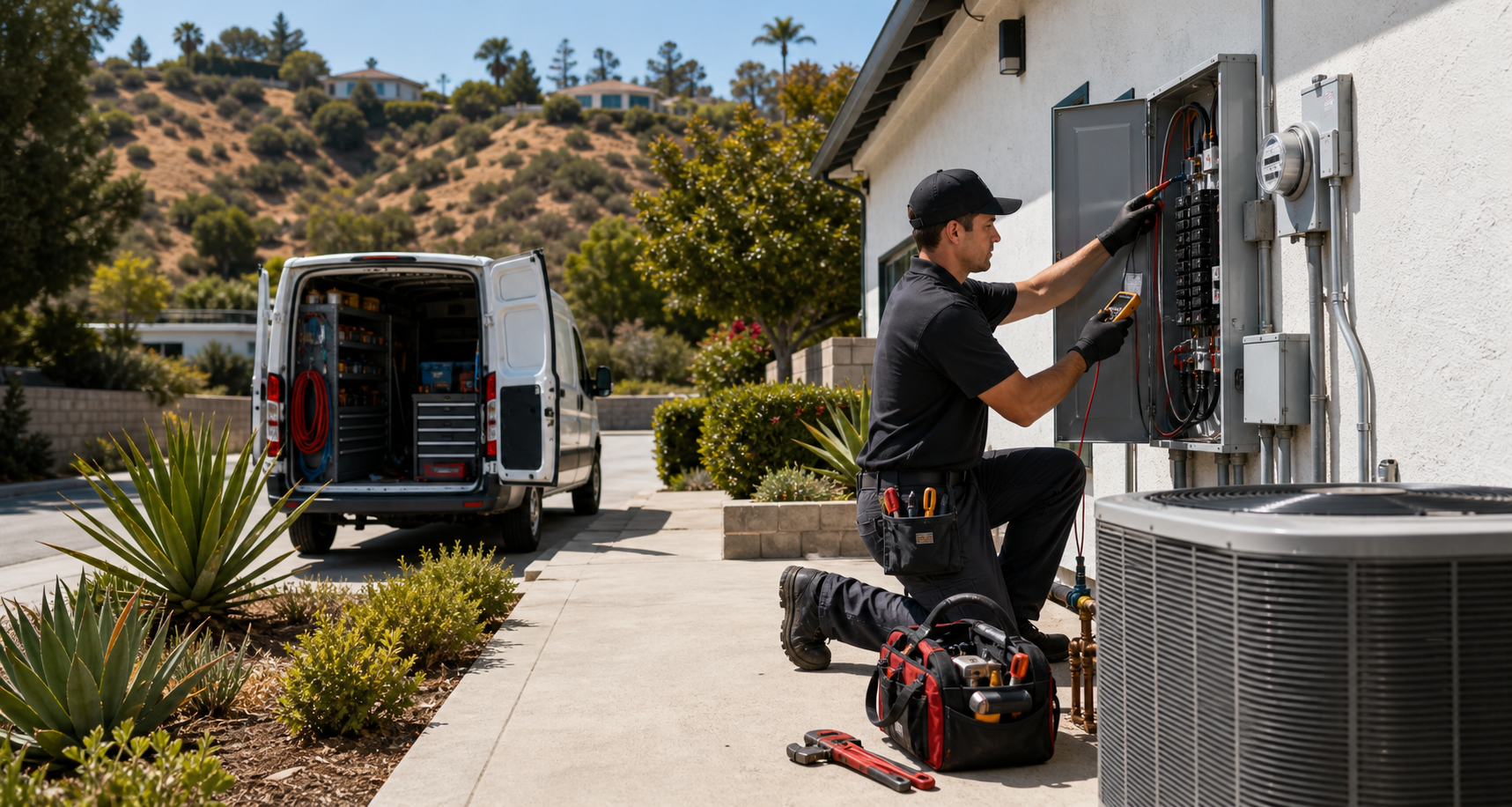
The useful part was that the technician wrote down the evidence instead of selling from memory. Our Santa Anita Oaks house had larger home loads and long laterals, and the heat pump installation visit included Daikin FIT heat pump, 36,000 BTU load review, and checked panel capacity and condensate route before equipment selection. RidgeFlow explained what was proven, what still depended on access, and why the proposal explained why the duct work mattered. The notes made clear which items were code, comfort, or owner preference. The notes were specific enough to compare against another estimate without guessing.
Frequently asked questions
Direct answers for homeowners comparing repair, replacement, emergency service, permits, and cost drivers in LA foothill communities.
Short Answer
The fastest route is to book service, describe the affected system, and include city-specific access or safety details. The site also has service, city, and guide pages for deeper research.
Common planning questions
Foothill homeowners often ask whether they should repair or replace, whether a permit applies, whether a panel can support a heat pump or EV charger, why drains back up after rain, and whether wildfire smoke means the HVAC system needs cleaning or replacement. The answer depends on the home, not just the symptom.
Repair or replace?
Repair is usually strongest when the failed part is isolated, the base system is safe, access is simple, and there is no near-term upgrade that would make the repair wasteful. Replacement becomes stronger when failures repeat, equipment is near the end of useful life, safety or code corrections stack up, or the system cannot support future plans such as heat pumps, EV charging, backup power, remodels, ADUs, or water-heater changes.
A phased plan can be better than either extreme. Stabilize the home now, document the constraint, then group future work around open access, permit timing, or equipment planning.
Do permits always apply?
No single answer applies across Los Angeles County. Mechanical, electrical, plumbing, sewer, and water-heater work can route through different city or county authorities depending on the exact address and scope. Pasadena, LA County unincorporated parcels, LADBS areas, Glendale-edge hills, La Canada Flintridge, Sierra Madre, Monrovia, and other foothill jurisdictions can differ.
The practical answer is to identify the authority having jurisdiction before assuming the permit path. A technician should be clear when a permit is likely, when it needs verification, and when the immediate diagnostic work is separate from permitted installation or replacement.
What makes an emergency?
Electrical heat, burning odor, repeated breaker trips, active water damage, sewage backup, gas odor, water near electrical equipment, no cooling in dangerous heat, and failed hot water for essential needs should be treated urgently. Planned work such as fixture upgrades, lighting, thermostat changes, or efficiency improvements can usually be scheduled with more documentation and comparison.
When booking an emergency, describe the immediate risk first. Then add city, access, equipment photos, panel photos, cleanout photos, shutoff location, and any prior repair history.
Frequently asked questions
Do you provide HVAC, electrical, and plumbing in one visit?
When the scope requires more than one trade, RidgeFlow coordinates the assessment so the homeowner gets one practical order of operations instead of conflicting recommendations.
Do you handle permit-aware planning?
We explain likely permit and inspection touchpoints, then verify the correct path by parcel before work that requires city or county documentation moves forward.
Is the booking link the fastest way to start?
Yes. The booking link captures the service request cleanly, and the phone CTA is ready for the real number once it is provided.